Financial Challenges Facing FQHCs
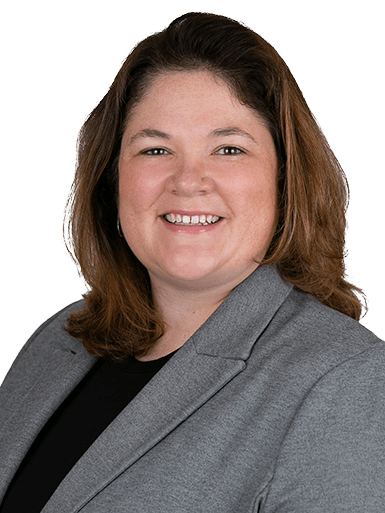
The following content, contributed by AAFCPAs’ Healthcare Practice Leader Courtney McFarland, appeared in STAT First Opinion, a platform showcasing perspectives and opinions on biotechnology, medicine, and the life sciences.
Mission-critical Care is Financially Unsustainable Under FQHCs’ Current Model
Twenty years ago, when I started working with federally qualified health centers, I once performed a walkthrough and shadowed a routine medical exam. English was not this patient’s first language, and a translator was readily available and assigned immediately to ease communication. During the intake process, the patient mentioned an unstable housing environment, food insecurity, and child care challenges. Afterward, the patient service representative did something unexpected: She assigned a case manager.

After that visit, I asked why a case manager was assigned, and I will never forget the answer I was given: “We support the whole person and family structure, not just the appointment on the schedule.”
It was an eye-opening experience that taught me the immense value of these virtually invisible health care centers. I often wonder, do we really understand all they offer our communities and what the impact would be without them?
Federally qualified health centers (FQHCs) exist to ensure health access by providing primary and preventive care regardless of ability to pay. Increasingly, that mission is pushing FQHCs toward financial crisis and closure. As frontline safety-net providers, they are expected to expand access, absorb rising costs, and stabilize communities when everything else fails, whether or not the funding exists to support it.
Between 2019 and 2023, federal grant dollars for FQHCs remained essentially flat even as health care costs increased more than 25% over the same period. Now, an estimated 11.8 million Americans are projected to lose health care coverage as Medicaid spending is reduced by $344 billion across the next decade, driving even more uninsured patients through the doors of FQHCs.
The first U.S. FQHCs were established in 1965. Their design, inspired by community-oriented primary care models in South Africa, was simple: Nonprofit health centers would provide care for underserved and vulnerable communities while federal grant funding allocations would cover any financial losses incurred treating patients who could not afford to pay.
But after 50 years of operations, the same FQHCs that have cared for our communities are discovering that the financial structure has not kept pace with the realities of delivering on their mission.
Prior to the pandemic in 2019, FQHC net margins — the difference between revenue and costs — were less than 1%, with a brief boom between 2020 and 2022 at 5.3% due to one-time Covid pandemic funding.
By 2023, those margins had fallen back to 1.6% and, by 2024, margins were negative at around 2.1%. These numbers reflect a system that barely survived before Covid and is now actively losing ground.
The result: health center closures and program suspensions.
These insights were contributed by Courtney McFarland, CPA, MSA, 340B Apexus Certified Expert™.
Questions? Reach out to our author directly or your AAFCPAs partner.
AAFCPAs offers a wealth of resources for those in the healthcare industry. Subscribe to get alerts and insights in your inbox.
About the Author